I visited Iran back in January 2018 for about two weeks. I traveled solo the entire time, starting in Tehran, taking the bus to Esfahan, traveling all the way down to Shiraz, and then hopping on a train back to Tehran. Here’s what struck me most about Iran on that first trip.
1. Iran is the most misunderstood country in the world.
A lot of people mix up Iran and Iraq and just assume Iranians are Arabs. But nope—they’re not Arabs at all. They’re proud Persians, and they can get pretty annoyed if you mix them up! Coming from the cradle of civilization, they’re super proud of their history and ancestors. They’d much rather you don’t call them Arab, even though Farsi is written in Arabic script.
Iran was the first Middle Eastern country I ever visited, so back then, I had nothing else to compare it to.

2. Head covering is mandatory
When I flew to Iran from Kuala Lumpur, almost none of the Iranian women on the plane were wearing headscarves — everyone was just chilling with their hair out. But the moment the flight attendant said we’d be landing at Khomeini Airport soon, all the Iranian ladies, the stewardesses, and even me (the tourist) scrambled to throw on our hijabs before touchdown. Total opposite on the way back: right after takeoff from Tehran, as soon as the attendant announced we could unbuckle, those female passengers ripped their scarves off instantly—I swear you could hear the dramatic whoosh as dozens of hijabs came flying off at the same time.
They looked so done with it, like, “Finally, freedom!” One day at a bus terminal, my scarf slipped from my shoulder, and the older woman, dressed in full Catholic nun-style hijabs, cast me a piercing stare, as if she were moments away from summoning the morality police.
From what I saw, head coverings in Iran come in every type. Most local women (and tourists like me) just wear loose scarves that cover half the head. The older ladies go for the full black niqab, while the women on TV are always in that full hijab look, like a Virgin Mary.


Older women in a niqab
3. Iranian Currency: Rial and Toman

Money in Iran is a bit of a mind game when we first get there. The official currency is the Rial, but in everyday life, it is the unofficial Toman, where 1 Toman equals 10 Rials. So when a local says “that’ll be 1,000 Tomans,” they actually mean 10,000 Rials.
One quirky thing I noticed everywhere is that a lot of Iranian banknotes are covered in little Farsi doodles and scribbles — people just write on money like it’s scrap paper.
And because of international sanctions, Iran is basically a cash-only country for foreigners. Credit cards, debit cards, and traveler’s checks are totally useless. We gotta bring enough cash (USD or Euros are best) to last our entire trip, since we can’t use ATMs to withdraw money from foreign accounts.
4. Anti-American Sentiments
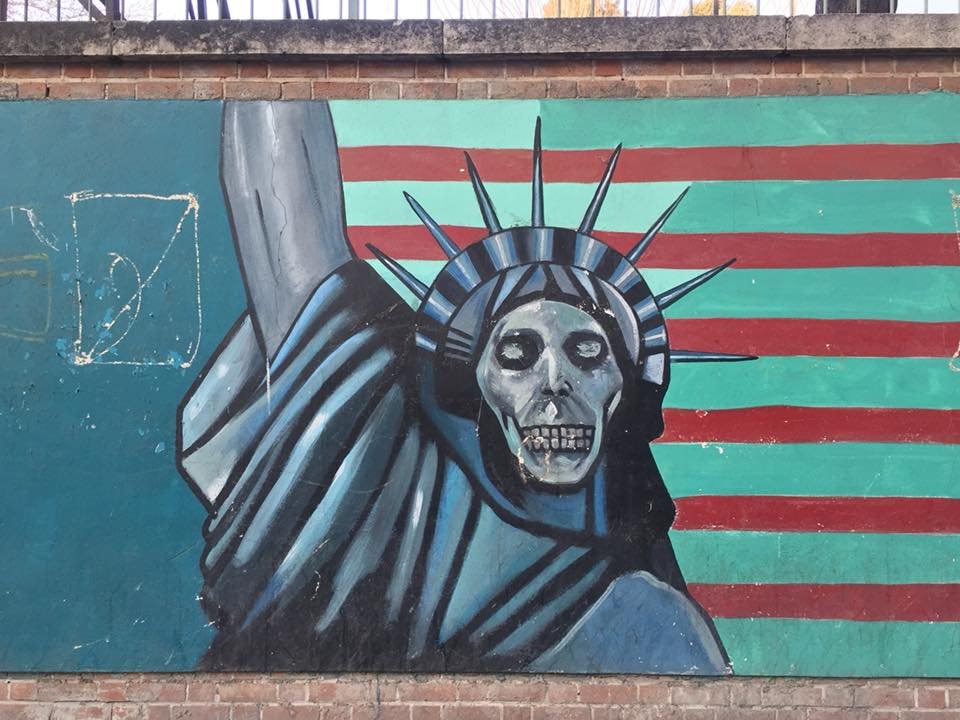
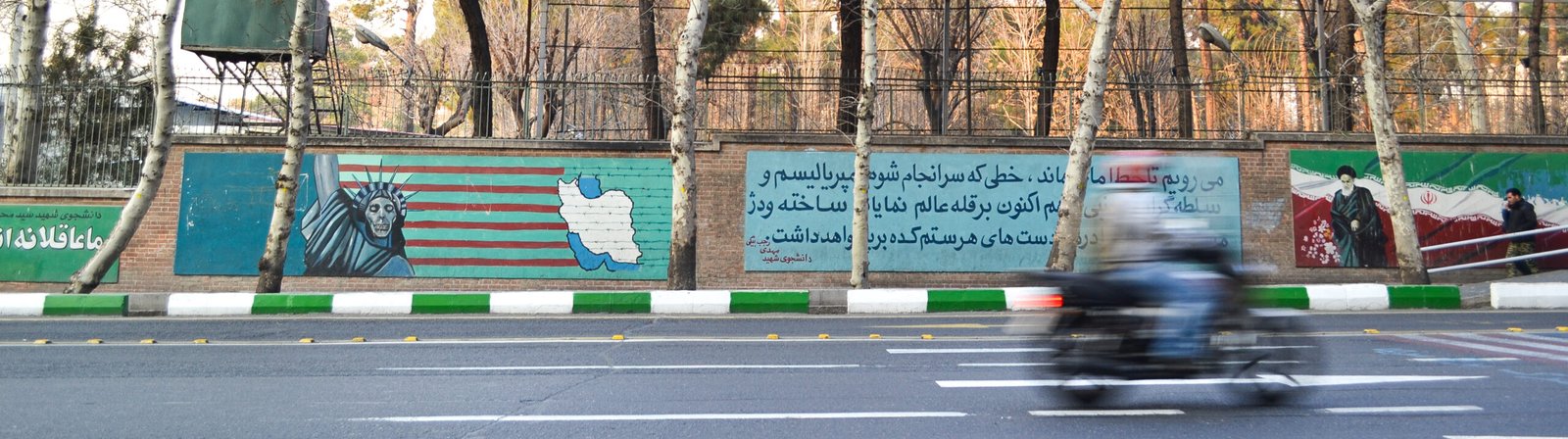
I can’t stop staring at the numerous murals in Tehran, which depict anti-American propaganda reminiscent of 1979. The classic skeleton version of the Statue of Liberty crumbling in chains, missiles soaring as if they were the city’s new mascots, and these larger-than-life portraits of Khamenei and the mullahs positioned as Iran’s unbreakable protectors.
It definitely gives me North Korea vibes, like the regime still proudly waves the revolution flag against “the enemy” decades later. Kinda weird and honestly a little unhinged, right? As a tourist, I can see it as a wild perspective on history and politics, but man, I can’t imagine how toxic it must be for everyday Iranians—growing up surrounded by constant indoctrination to hate. The government’s messaging is so loud and relentless it almost feels psycho, yet here I am, just snapping pics like it’s the world’s most intense open-air art gallery.


While I was busy snapping pics of all those propaganda murals along the wall, I suddenly got interrupted by the roar of a dozen motorcycles pulling up. I turned around and saw a bunch of guys in dark green uniforms, probably IRGC, rolling straight into the gate of the old US embassy, yelling something in Farsi that I couldn’t understand at all. My inner spy was dying to whip out the camera and document the whole scene, but as a tourist, I really didn’t want to risk any trouble—photographing soldiers or police here feels kinda insensitive and probably illegal. So I played it sneaky and just caught their reflection in a nearby shop window instead. Mission kinda accomplished.

5. Three Things the Iranian Regime Hates the Most
Besides the United States, there are three other things the Iranian regime absolutely can’t stand: Israel, Wahhabism, and ISIS.
Even passing the subway in Tehran, we can’t escape the political posters plastered everywhere. I kept staring at them thinking, “Wait, is this for tourists like me… or is this just everyday life for locals?” It didn’t take long before I realized—this is what life under a theocracy entails.

After just a few days, I already felt super uncomfortable with this indoctrination. I genuinely can’t fathom how Iranians have endured this situation for over four decades. This journey also clarified the reasons behind the long-standing enmity between Iran and Saudi Arabia. Iran follows the Shia branch of Islam, which makes up less than 20% of Muslims worldwide. Since the 1979 Islamic Revolution, the regime has relentlessly pursued the dissemination of its version of “Islamic Revolution” throughout the entire Muslim world. Khomeini openly proposed that Saudi Arabia should not govern Mecca and Medina.
To the Iranian regime, Wahhabism ( super-strict Sunni Islam that dominates in Saudi Arabia) isn’t just a rival school of thought—it’s an ideological enemy, an existential security threat, and basically a puppet of the West (especially America). They love painting it as a “death cult” or some twisted perversion of Islam that’s behind all the extremism and terrorism in the Muslim world.
So yeah, Iran has been the main player stirring up hatred against Wahhabism for a long time, though the fact is “Wahhabism” is just a revival movement that sees itself as returning to pure, orthodox Sunni Islam. It kicked off in 1771 when the Saudi-Wahhabi alliance started unifying the Arabian Peninsula. The Arabs just wanted to wipe out stuff like grave worship, asking the dead for help, building shrines over graves, and doing anything that wasn’t strictly for Allah.
So next time you see someone like Daniel Haqiqatjoe or any random gullible Muslim online trashing Wahhabism or “Sunni orthodoxy,” it’s worth remembering that narrative comes straight from decades of Iranian regime propaganda.
6. Twelver Shi’ism just feels completely foreign to me

It’s like they’re still living in the 7th century, and I honestly thought this whole branch of Islam wasn’t even real at first. I swear, the more I dig into it, the more it reads like the plot of some wild, over-the-top drama movie. The deeper I go, the less it adds up, and I keep thinking… why don’t they just start their own religion already?
Take the mosques, for example. In regular Islam, you’re not supposed to hang up photos or images inside the mosque—that’s kinda what makes Islam unique. But when I visited a mosque in Tehran, there was this whole room with massive pictures of Khomeini and Khamenei hanging on the walls.
Then in tea houses or shops, there’s the whole thing with hanging up portraits of bearded guys they say are Ali or Imam Hussein—the Prophet’s grandkid who got killed in Karbala, Iraq.
Look, no disrespect to the Prophet’s family, but Shia folks really lean hard on bloodline and lineage. That’s just not what Islam is about. The Quran is crystal clear: honor isn’t about your tribe or family tree—it’s about taqwa, how pious and righteous you actually are.
The way Twelver Shia treat their Imams sounds exactly like Catholicism—super holy middlemen who supposedly speak for God. Nah. In Islam, you pray directly to the Creator, no middleman needed. We’re all equal as humans; the only “holy” people are babies who haven’t sinned yet.
In true Islam, an imam is just the guy who leads the prayer in the mosque, not some divine spokesperson. I’m sorry, but I’m not buying any imam who claims he chats with God.
Then there’s Ashura and all the mourning rituals. Shia tradition goes hard—wailing, beating their chests, slapping their cheeks, tearing clothes—every Muharram. But that stuff is actually against core Islamic teachings. The Prophet (peace be upon him) prohibited loud lamentation because it shows impatience and basically says you’re unhappy with Allah’s decree.
Check Surah Al-Baqarah (2:155-156): “And We will surely test you with something of fear and hunger and a loss of wealth and lives and fruits, but give good tidings to the patient, who, when disaster strikes them, say, ‘Indeed we belong to Allah, and indeed to Him we will return.'”
I think this verse delivers a strong and beautiful message. It’s a reminder that life is a test. Stuff happens for a reason. If we can’t accept that, we’re just setting ourselves up for endless sadness and depression. True Islam teaches strength and acceptance, not turning everything into a never-ending soap opera. Life isn’t a drama series. Life must go on, we need to move on, not crying about it for the whole life.
Anyway, there are synagogues and churches in Iran; the photo below was taken in the Armenian neighborhood in Esfahan. I like this beautiful city. But, the people love to wear black or dark fabric, why?? It gave me a gothic vibe and felt a little bit gloomy.

7. Iran is not an Islamic country—they should drop the word “Islamic” from their name.
The majority of Iranians I met on my trip are atheists. I never asked about their religion upfront (that’s not my way at all, especially with people I barely know), but they were so eager to let me know they’re done with Shia Islam. They hate it passionately, along with anything Arab-related. Of course, they can’t say it out loud in public—renouncing it could get them the death penalty.
I realized something big: a theocratic state doesn’t just fail—it causes harm, builds up anger, and traumatizes people about religion. But Iranians inside Iran are the most hospitable people I’ve ever met while traveling. Maybe it’s because the majority are dying to meet foreigners, since Iranian passports are so weak and travel is a big deal for them.
I sincerely hope they can free themselves from the lunatic mullahs one day. I think it would be wonderful for everyone.